
Our process
It is a short list on purpose
There are only two ingredients in anything we make: the fruit, and time. Every decision below exists to protect that.
- 01
Picked ripe, not early
Fruit for drying has to be riper than fruit for selling fresh — it needs the sugar. We buy late in the season from growers who will hold the crop on the tree rather than pick to a shipping schedule.
- 02
Washed, halved, stoned
Everything is prepared by hand the same day it arrives. Apricots and peaches are halved and stoned, figs split, pineapple cored, kiwi and pear sliced to an even thickness so they dry at the same rate.
- 03
Low heat, long hours
Air-dried at temperatures low enough that the fruit never cooks. It takes far longer than a hot dryer and costs more per batch, but it is the difference between concentrated fruit and something chewy and flat.
- 04
Nothing added
No sugar, no syrup, no glycerine to keep it glossy, and no sulphur dioxide to keep it bright. Untreated apricots turn amber-brown. That colour is the point, not a defect.
- 05
Sealed the same week
Into resealable matte pouches with a window, labelled with the flavour, the weight and the batch. Nine months of shelf life from the manufacturing date stamped on the back.
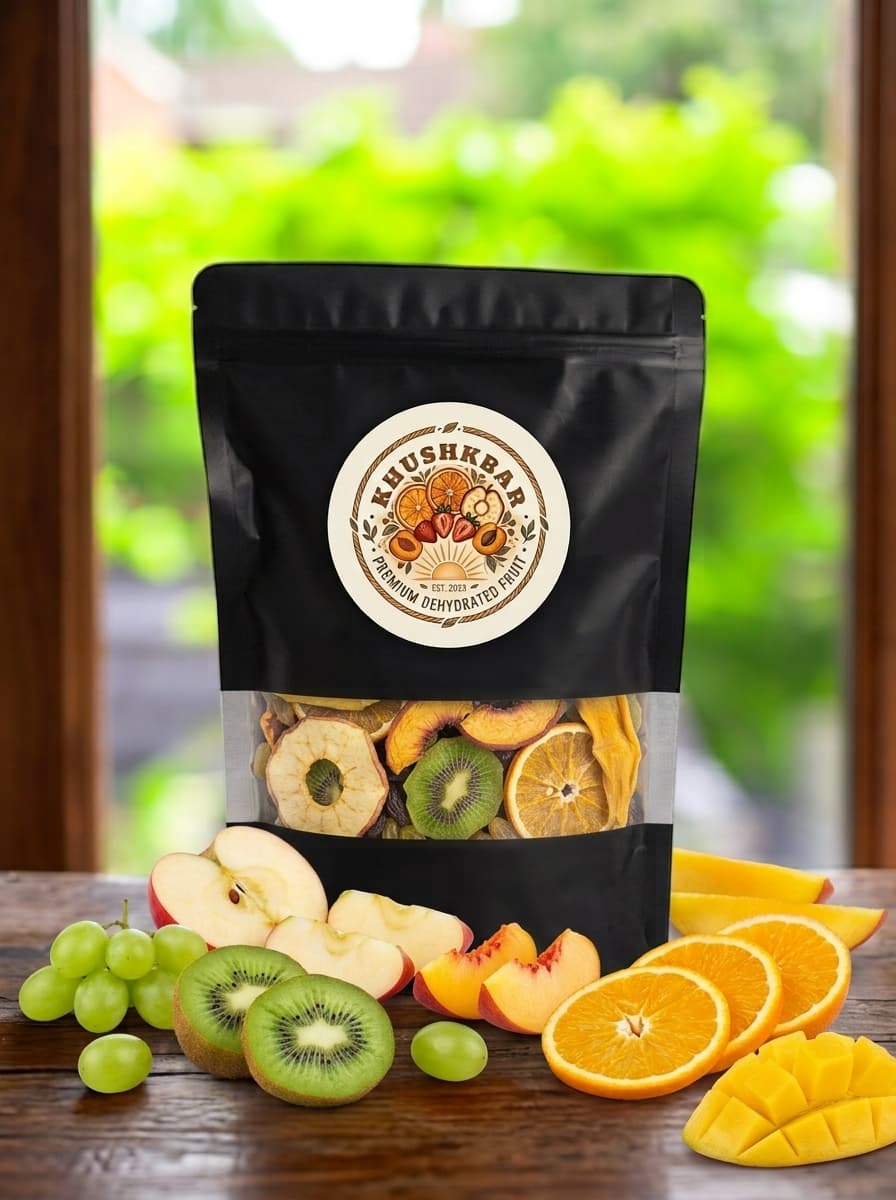
Why the bag looks like this
Matte film rather than gloss, because gloss makes dried fruit look wet. A window, because you should be able to see exactly what you are buying — the size of the pieces, the real colour, how much is actually in there.
See the range